Truck Tire Wear Patterns
Feathering Wear
Feathering is easier to feel than see. Run a hand lightly across the tread — one direction feels smooth, the other feels sharp or raised. Tread ribs develop a saw-tooth surface where the leading edge of each block wears at a different rate than the trailing edge. The pattern may be subtle before it becomes visible, but the touch test catches it early.
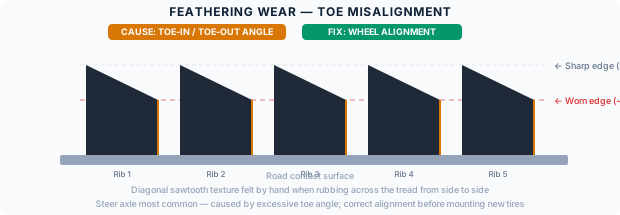
Cause and alignment check
| What you find | Likely cause | First check |
|---|---|---|
| Sharp feel in one direction across tread ribs | Toe setting dragging the tire laterally against the direction of travel | Toe measurement and steering linkage condition |
| Feathering on both tires at the same axle | Axle tracking problem or alignment affecting the full axle pair | Full alignment report — toe and camber together |
| Pattern returns quickly after rotation | Uncorrected mechanical cause in the original position | Suspension components, kingpins, and steering wear inspection |
Steering and suspension checks
- Alignment settings — toe specifically
- Tie rods and steering linkage play
- Kingpins and bushings
- Trailer tracking if feathering repeats on trailer tires
How to confirm the direction
Use a flat palm and move across the tread face in both directions. Feathering usually feels smooth one way and sharp the other way. Record which direction feels sharp before the tire is rotated or moved; the direction can help an alignment technician understand how the tire was being dragged.
Do not rely only on a visual photo unless the pattern is already severe. Early feathering can be almost invisible in a picture but obvious by touch.
What feathering is not
- It is not the same as center wear, where the center ribs are lower than both shoulders.
- It is not the same as cupping, which creates repeating dips around the tire circumference.
- It is not fixed by airing the tire up or down unless a pressure problem is also present.
- It is not solved by rotation if the toe, steering, or axle-tracking issue remains.
Recheck after alignment
After an alignment correction, mark the tire position and remeasure the same ribs after a short service interval. Feathering will not visually disappear, but it should stop getting sharper. If the saw-tooth feel keeps growing, look for worn steering linkage, kingpins, or an axle-tracking issue that was not corrected by the alignment setting alone.
Position history matters
Before calling feathering a current alignment problem, ask whether the tire was recently rotated from another axle. A feathered tire carries its old texture with it. If the sharp feel is present immediately after rotation but does not progress in the new position, the old position may have been the source. If it keeps getting sharper, inspect the current position.
When to escalate
Escalate when feathering is accompanied by pulling, wandering, vibration, or rapid tread loss. Feathering that continues after alignment correction points to a mechanical issue — suspension wear, worn kingpins, or damaged steering components — that was not fully addressed.
Related Maintenance Checklist
- Feel tread in both directions.
- Check both tires on the axle.
- Review alignment history.
- Recheck after correction to confirm the pattern stops growing.
FAQ
What is feathering wear on a truck tire?
Feathering is a wear pattern where tread ribs or blocks develop a saw-tooth texture — smooth on one side and sharp on the other. It is usually caused by toe misalignment, which drags the tire laterally across the road surface rather than allowing it to roll cleanly in the direction of travel. The pattern is often easier to feel by hand than to see, especially in its early stages.
Does feathering wear cause noise or vibration?
As feathering progresses and the tread blocks become increasingly uneven in height, the tire can produce a humming or droning noise at highway speeds. If feathering is already causing audible noise, the alignment issue has been present long enough to wear significant tread. Correcting the alignment stops the pattern from growing; the existing feathered tread will not smooth out on its own.
Can a feathered tire be rotated to extend its service life?
Rotating a feathered tire to a different position can change the forces acting on it, and some feathering may reduce if the rotation direction changes. However, rotating without fixing the alignment issue that caused the feathering typically produces the same pattern on the new position and may mask the underlying cause. Correct the alignment first, then evaluate whether the tire has enough remaining tread life to continue in service.
Source Notes
- Government 49 CFR 393.75 - Tires
- Government TireWise Tire Safety
- Industry U.S. Tire Manufacturers Association Tire Safety
- Site note TruckTireGuide.com editorial notes
Editorial Review
TruckTireGuide.com editorial team
Maintained by an independent editor with fleet tire-program experience in regional Class 8 operations, supported by transportation regulatory research and commercial vehicle technical writing.
Pages are checked against public regulations, manufacturer resources, industry references, and conservative field practice. The site does not approve tires for service or replace qualified inspection.