Truck Tire Wear Patterns
Heel-Toe Wear
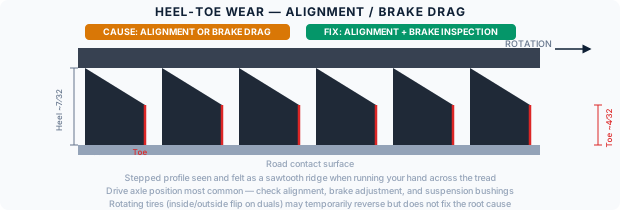
Heel-toe wear is a stepped tread block pattern: the leading edge of each block wears at a different rate than the trailing edge. Measuring the block height at both faces shows the difference; feeling the tread by hand reveals the stepping before a gauge is pulled.
Mild heel-toe on blocky drive or trailer tread is common. Significant or fast-developing heel-toe points to scrub, suspension wear, or delayed rotation.
Application and cause reference
| Where found | Likely cause | First check |
|---|---|---|
| Drive tires, long rotation interval | Torque and braking forces on block edges, rotation deferred too long | Position history and miles since last rotation |
| Trailer tires, regional or yard service | Tight-turn scrub or trailer axle tracking problem | Trailer alignment and yard use history |
| Pattern develops after rotation to new position | Root cause not corrected before rotation | Suspension bushings, torque rods, full alignment review |
What to check before rotating
- Rotation interval — how many miles since last rotation?
- Dual matching and tread depth differences
- Suspension bushings and torque rods
- Alignment or axle tracking
- Application fit for the tread design
How to decide if rotation is enough
Rotation is reasonable when the pattern is mild, the tire still measures evenly at the low points, and the axle has no repeat history of damaging tires. Treat rotation as a maintenance action, not as a diagnosis by itself.
If heel-toe wear is paired with a pull, vibration, loose suspension parts, mismatched duals, or a pattern that comes back on the same position after every rotation, schedule a mechanical inspection before moving the tire again. Otherwise the next tire inherits the same scrub.
What to write on the work order
- Original axle and side
- Mileage since last rotation if known
- Highest and lowest tread block reading
- Whether the mate tire shows the same stepping
- Any suspension or alignment note found during the check
When to stop
Stop when the tire becomes noisy, vibrates, loses tread rapidly, or shows other damage beyond the tread block pattern.
Related Maintenance Checklist
- Compare both tires in a dual set.
- Measure tread block highs and lows.
- Inspect suspension torque rods and bushings.
- Record tire position before rotation.
FAQ
What causes heel-toe wear on truck tires?
Heel-toe wear develops when the leading and trailing edges of tread blocks make uneven contact with the road. Drive torque and braking forces push against the trailing face of each block; tight-turn scrub drags the tread laterally. Delayed rotation intervals allow the pattern to develop further. Suspension wear that allows excess wheel movement can accelerate heel-toe development on drive positions.
Is heel-toe wear on trailer tires normal?
Some mild heel-toe wear on trailer tires is expected, especially in operations with frequent tight-turn yard moves. Significant or rapid heel-toe wear suggests a more specific cause — trailer axle misalignment, worn suspension components, or mismatched duals causing one tire to drag. Measure tread block height differences and track the rate of development to decide whether the cause needs active correction.
Can rotation fix heel-toe wear?
Timely rotation can slow heel-toe development by changing the direction of forces on the tread blocks. But rotation without correcting the underlying cause — alignment, suspension wear, delayed intervals — produces the same pattern more quickly on the new position. Investigate and fix the root cause before relying on rotation as the primary solution.
How do I measure heel-toe wear to confirm the pattern?
Measure tread depth on the leading edge of a tread block and the trailing edge of the same block using a depth gauge. On a tire with heel-toe wear, the two readings will differ — the trailing face is lower than the leading face, or vice versa depending on the tire's rotation direction. A difference of 2/32 inch or more between the leading and trailing faces of the same block is a consistent sign of the pattern. Photographing the tread circumference from a side angle in good light before rotation also reveals scalloping that confirms the measurement.
When does heel-toe wear become a reason to remove a tire?
Heel-toe wear becomes a removal reason when the lowest point of the scalloped tread reaches the fleet pull depth or federal minimum — whichever is more conservative. It also becomes a concern when the depth difference between the high and low points of the blocks is large enough that the remaining high points are not representative of actual tire life. A tire with severe scalloping may still read adequate tread at the high points while the low points are already at or near minimums. Measure the low point, not the high point, when evaluating remaining service life.
Source Notes
- Government 49 CFR 393.75 - Tires
- Government TireWise Tire Safety
- Industry U.S. Tire Manufacturers Association Tire Safety
- Site note TruckTireGuide.com editorial notes
Editorial Review
TruckTireGuide.com editorial team
Maintained by an independent editor with fleet tire-program experience in regional Class 8 operations, supported by transportation regulatory research and commercial vehicle technical writing.
Pages are checked against public regulations, manufacturer resources, industry references, and conservative field practice. The site does not approve tires for service or replace qualified inspection.