Semi Truck Tire Pressure
Semi Truck Tire Pressure Guide
There is no single correct PSI for every semi truck tire. The right pressure depends on tire size, axle load, position, speed/application limits, and the manufacturer load/inflation table.
A repeatable checking process keeps a pressure number from becoming a guess passed from truck to truck.
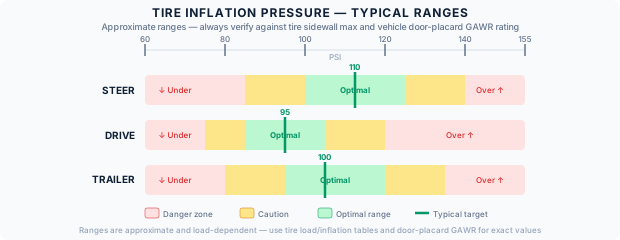
How to set a target pressure
- Identify tire size and service description (including load range).
- Know the loaded axle weight — from a scale ticket or documented fleet record.
- Use the tire manufacturer load/inflation table for that exact tire size and model.
- Follow vehicle, trailer, or fleet policy when stricter than the table result.
- Check cold pressure with a reliable gauge before operating.
Load range and maximum cold inflation reference
The maximum cold inflation pressure marked on the sidewall is the upper limit for that load range — not the target for service. The working pressure comes from matching the actual axle load to the manufacturer load/inflation table. The table below shows common load ranges and their typical maximum markings as a reference.
| Load range | Common ply-rating equivalent | Max cold inflation (typical) | Common application |
|---|---|---|---|
| F | 12-ply | 95 PSI | Some lighter trailer and specialty applications |
| G | 14-ply | 110 PSI | Common steer, drive, and trailer on most highway tractors |
| H | 16-ply | 120 PSI | Higher-capacity steer and drive applications, heavier axle loads |
| L | 20-ply | 130 PSI | Heavy-duty vocational and specialized applications |
What "cold pressure" means
Cold pressure is the tire pressure measured before the vehicle has been driven more than one mile, or after it has sat for at least three hours away from direct sunlight. Heat from driving raises pressure readings — as a rough field range, commonly 10 to 15 PSI or more above the cold reading, though the actual rise depends on tire size, load, speed, and ambient temperature. Checking hot tires and comparing against a cold target produces a misleading result. Always establish cold pressure as the baseline; the target value comes from the manufacturer load and inflation table for the specific tire and axle load.
Pressure record that helps later
Record pressure by tire position, not only by axle. A note that says "drive tires checked" does not help find a slow leak on the right-rear inside dual. Position-level records make repeated loss visible before it becomes a roadside tire call.
Boundary of the reference
No universal PSI target is published here. Exact pressure must come from official tire data and the operating conditions of the equipment. Copying a pressure from another truck without verifying the axle load, tire size, and load range is not a reliable process.
Pressure Check Sequence
- Check cold when practical.
- Use a gauge you trust.
- Check inside duals, not only outside tires.
- Replace missing valve caps.
- Record repeated pressure loss.
FAQ
Is there one PSI that is correct for all semi truck tires?
No. The correct pressure depends on tire size, load range, axle load, and position. Steer, drive, and trailer tires on the same truck often need different pressures because the axle loads differ. Use the tire manufacturer's load and inflation table for the specific tire size and model — not a number copied from another truck or posted on a shop wall.
When should semi truck tire pressure be checked?
Check tire pressure cold — before the truck has moved more than a mile, or after it has sat for at least three hours away from direct sunlight. Driving raises tire temperature and increases pressure — as a rough field estimate, commonly 10 to 15 PSI or more above cold readings, varying by tire size, load, and ambient temperature. Checking a hot tire gives a reading that is higher than the true cold pressure, which makes the result unreliable as a baseline. Cold checks give the most repeatable and comparable readings.
How much does temperature affect truck tire pressure?
As a rough field estimate, tire pressure changes approximately 1 to 2 PSI for every 10°F change in ambient temperature — actual results depend on starting pressure, tire size, and how uniformly the temperature change affects the air column. A tire inflated to target pressure in a warm shop may read lower in cold overnight conditions, and higher after a long run in summer heat. Recheck cold pressure after significant ambient temperature changes, and do not bleed pressure from a hot tire to compensate for temperature-driven readings.
Source Notes
- Government 49 CFR 393.75 - Tires
- Government TireWise Tire Safety
- Manufacturer Michelin Truck Tire Data Book / Load and Inflation Resources
- Site note TruckTireGuide.com editorial notes
Editorial Review
TruckTireGuide.com editorial team
Maintained by an independent editor with fleet tire-program experience in regional Class 8 operations, supported by transportation regulatory research and commercial vehicle technical writing.
Pages are checked against public regulations, manufacturer resources, industry references, and conservative field practice. The site does not approve tires for service or replace qualified inspection.