Semi Truck Tire Sizes
Semi Truck Tire Size Chart
A tire size stamped on the sidewall is not a shopping shortcut by itself. It tells you the casing dimensions and wheel diameter, but it does not confirm load capacity, approved rim width, inflation pressure, or vehicle clearance.
Treat the chart as a field reference for common highway sizes, then verify the actual tire model against the vehicle placard and the tire manufacturer data.
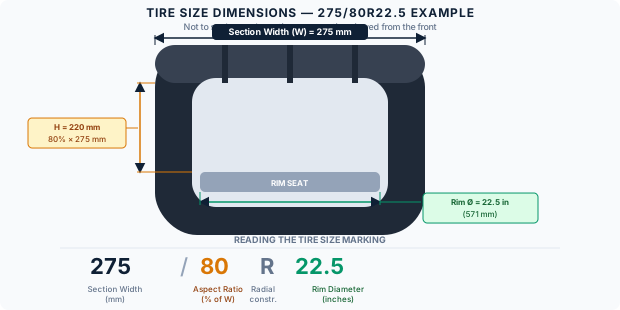
Common size families
| Size family | Typical position | What to verify |
|---|---|---|
| 11R22.5 | Steer, drive, trailer depending on application | Load range, rim width, diameter clearance, inflation table |
| 295/75R22.5 | Low-profile alternative in many fleets | Overall diameter, revolutions per mile, axle load |
| 11R24.5 | Regional and vocational highway equipment | Fender clearance, fifth-wheel height, gearing effect |
| 285/75R24.5 | Low-profile 24.5-inch applications | Dual spacing, loaded radius, replacement policy |
Typical dimensions by size family
Values below are typical ranges compiled from published manufacturer data. Exact values vary by brand, tire line, and service description. Always confirm the specific dimensions from the manufacturer data sheet for the tire you are evaluating before ordering or installing. These numbers are a reference starting point, not a substitute for manufacturer data.
| Size | Section width (in) | Overall diameter (in) | Rev / mile (approx) | Common approved rim width (in) |
|---|---|---|---|---|
| 11R22.5 | 10.8 – 11.0 | 41.2 – 41.5 | 494 – 500 | 7.5 – 9.0 |
| 295/75R22.5 | 11.4 – 11.7 | 39.4 – 40.0 | 515 – 524 | 8.25 – 9.75 |
| 11R24.5 | 11.0 – 11.2 | 43.3 – 43.7 | 471 – 477 | 7.5 – 9.0 |
| 285/75R24.5 | 11.0 – 11.2 | 41.4 – 42.0 | 488 – 495 | 7.5 – 9.0 |
Before changing tire size
- Compare the sidewall service description and load range.
- Confirm the rim diameter and approved rim width.
- Check dual spacing on drive and trailer axles.
- Look at speed rating, casing restrictions, and retread policy.
- Use the manufacturer load/inflation table for the exact tire line.
How to use this chart in the field
Use the chart to decide what information still needs to be verified, not to approve a tire by itself. A dispatcher may receive a photo that only shows "11R22.5" on the sidewall; maintenance still needs the load range, service description, current axle position, wheel width, and whether the tire is going into single or dual service.
If the truck is being bought used, check every axle. It is common to find a correct-looking size on the steer axle and a mismatched low-profile substitution on one drive or trailer position. The mismatch may not be obvious until tread depth, revolutions per mile, and dual spacing are checked together.
Ordering notes
- Order by full size and service description, not by rim diameter alone.
- Ask for the current data sheet when changing profile or brand.
- Confirm whether the tire is approved for steer, drive, trailer, or mixed service.
- Check spare tire strategy before standardizing on a less common size.
- Record the tire line and size in fleet notes so the next replacement is not guessed from memory.
Size Verification Checklist
- Read the full sidewall, not only the size.
- Check the vehicle placard or fleet spec.
- Confirm clearance at full steer and loaded suspension.
- Verify load range and service description.
- Do not mix mismatched dual diameters.
FAQ
What are the most common semi truck tire sizes?
Among the most widely used highway tire sizes are 11R22.5, 295/75R22.5, 11R24.5, and 285/75R24.5. The 295/75R22.5 is now commonly specified alongside or instead of the 11R22.5 in many long-haul applications because of its similar load capacity and lower overall diameter. The right size for a specific truck depends on axle rating, rim diameter, wheel width, and fleet or vehicle specifications.
Can different tire sizes be mixed on the same axle?
Mixing tire sizes on the same axle — especially in dual assemblies — is generally not acceptable. Different sizes change the rolling diameter, causing one tire to carry more load and building heat unevenly. Always match size, load range, and tread depth within dual sets. Follow manufacturer guidance on acceptable combinations. If sizes were mixed by mistake, correct it before the next trip.
How do I know which tire size is correct for my truck?
Start with the vehicle placard or manufacturer specification sheet, which identifies the approved tire size and load range for each axle position. If the placard is missing or illegible, contact the vehicle manufacturer or a qualified tire professional. Do not rely solely on the existing tire size without confirming it matches the current vehicle approval, especially after a repair, rebuild, or used equipment purchase.
Source Notes
- Manufacturer Michelin Truck Tire Data Book / Load and Inflation Resources
- Manufacturer Goodyear Commercial Truck Tire Resources
- Manufacturer Bridgestone Commercial Truck Tire Resources
- Site note TruckTireGuide.com editorial notes
Editorial Review
TruckTireGuide.com editorial team
Maintained by an independent editor with fleet tire-program experience in regional Class 8 operations, supported by transportation regulatory research and commercial vehicle technical writing.
Pages are checked against public regulations, manufacturer resources, industry references, and conservative field practice. The site does not approve tires for service or replace qualified inspection.